29 Apr 24
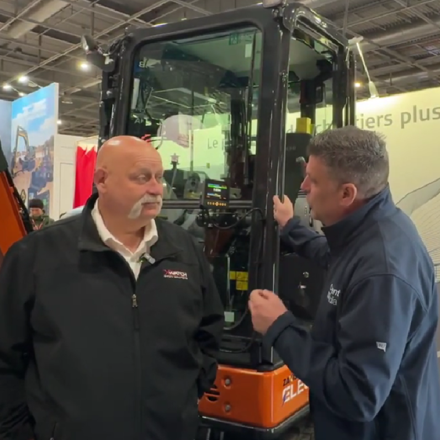
At Xwatch, safety is our priority. We are dedicated to delivering the latest updates on our Xwatch safety systems to machinery manufacturers, hirers, and contractors, focusing on how to protect your workforce effectively. Join us in this video, featuring Dan Leaney and Peter Haddock at the recent INTERMAT Paris, where we discuss the critical role of the operator in maintaining safety on the job, emphasising how our systems enhance operator safety without 'cab clutter'.
The Xwatch Leica Geosystems part of Hexagon 3D collision avoidance system significantly advances safety and operational efficiency for construction machinery applications. Since its introduction nearly a year ago, this innovative system has captured the attention of global markets, for its revolutionary approach to preventing collisions and enhancing safety protocols.
The system utilises Xwatch and Leica technology to create a three-dimensional "safety bubble" around machinery, effectively preventing it from entering or interacting with restricted areas. Its reception as a transformative technology in the field highlights its global impact. Operators benefit from an advanced user interface that integrates visual cues into the Leica MC1 display, which simplifies navigation by clearly outlining accessible and restricted areas without the need for physical markers.
The system’s ability to prevent machinery from entering hazardous zones significantly reduces the risk of accidents, enhancing overall site safety. It helps avoid disturbances to protected underground services and ensures compliance with site-specific regulations, contributing to environmental conservation.
With its increasing acceptance across various markets, the Xwatch Leica 3D collision avoidance system is poised to become a standard tool in the industry. This technology promotes safer and more efficient operations and is expected to set new benchmarks in the sector.
The Xwatch Leica 3D collision avoidance system is a technological advancement and a pivotal innovation in managing safety and efficiency in construction machinery operations. Its ongoing adoption and adaptation are anticipated to continue driving industry standards and practices forward.